Can the Amazon Cure Cancer? The Incredible Promise of No-Touch Medicine
We have been looking at the world from the wrong floor. For centuries, our relationship with the forest has been defined by a brutal, extractive logic: to use the tree, we must kill the tree. We harvest timber for furniture, pulp for paper, and bark for medicine. We treat the rainforest as a warehouse of physical parts, ignoring that it is actually a library of biological code.
But what if we could "read" the forest without touching it? What if the cure for cancer wasn't in the bark of a vine, but in the genetic algorithm that built it?

Visual creation: Pierre Guité & Mid-Journey
This is the promise of the "No-Touch" Revolution—a paradigm shift where genomics, ancient wisdom, and "green alchemy" converge to save human lives without costing a single tree.
The Eighth Continent Above Our Heads
To understand this revolution, we must first change our perspective. Francis Hallé, the visionary French botanist, has spent decades arguing that we barely know the planet we live on. He calls the tropical canopy the "eighth continent"—a floating archipelago of life suspended 50 meters above the ground.
For years, this world was inaccessible. To reach it, Hallé didn't just climb; he floated. He invented the Radeau des Cimes (Canopy Raft), a massive pneumatic structure carried by a dirigible that could rest gently on the treetops without crushing them. It was a mobile laboratory that allowed us to walk on the roof of the forest.
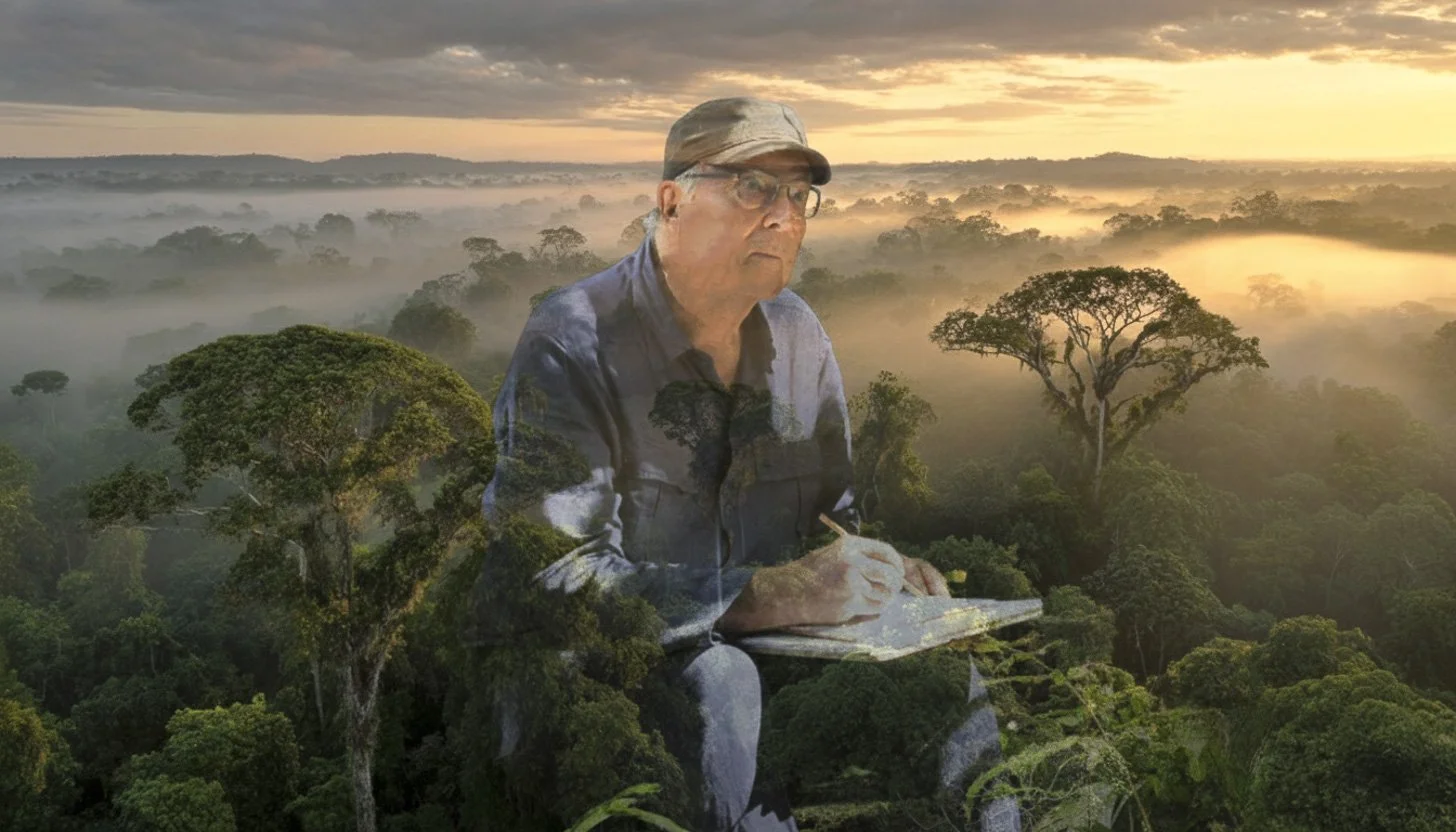
Illustration of François Hallé at work in the canopy: Pierre Guité & Gemini
Up there, exposed to scorching UV radiation and fierce competition, plants don't just grow; they innovate. They are chemical architects of the highest order. Hallé teaches us that a tree is not a static object but a "colony" of potential immortality, constantly reiterating its structure and refining its chemical defenses against the elements.
It is in this hostile, high-energy zone that the Uncaria tomentosa—the sacred "Cat's Claw" vine—manufactures one of nature's most elusive treasures: mitraphylline. This spirooxindole alkaloid is a molecular masterpiece, a twisted structure capable of reprogramming human immune cells to fight tumors.
The canopy is not merely a place—it is an architecture. Hallé identified nearly 24 distinct architectural models that describe how tropical trees grow and occupy space. Some, like the rubber tree (Rauh’s Model), grow rhythmically with a single trunk. Others, like the Kapok (Massart’s Model), build tiered branches like a pagoda. Each architecture dictates where stress concentrates, where metabolic activity peaks, and where the chemical factories work hardest.
This matters profoundly for medicine. The zones of highest stress—where branches terminate and force the tree to reiterate (a process Hallé calls "heroic growth"), where UV radiation is most intense—are precisely where the most complex molecules are forged. The canopy is not just a collection of leaves; it is a mosaic of survival strategies, each encoded with unique chemical solutions.
The "Spiro" Puzzle:
When Nature Beats the Lab
For decades, pharmaceutical chemists have tried to replicate mitraphylline in the lab. They failed. The molecule possesses a unique "spiro" twist—a complex 3D knot where two rings fuse at a single carbon atom to form a "quaternary center."
To force atoms into this shape, synthetic chemists have to use harsh solvents, high temperatures, and toxic heavy metals. The process is expensive, dirty, and inefficient—often producing a "mirror image" molecule that is biologically useless. Nature, however, performs this "origami" effortlessly, at room temperature, using nothing but sunlight, water, and enzymes.
The Asháninka people of the Peruvian Amazon have known about this power for millennia. Their Sancóshi priests don't view the plant as a bag of chemicals, but as a teacher with a spirit. They understood that the healing power wasn't just in the material, but in the information the plant carries—a dialogue between the spirit of the forest and the body of the patient.
To understand how they knew, we must leave the laboratory and enter the forest.
The Sacred Vine and Its Keepers
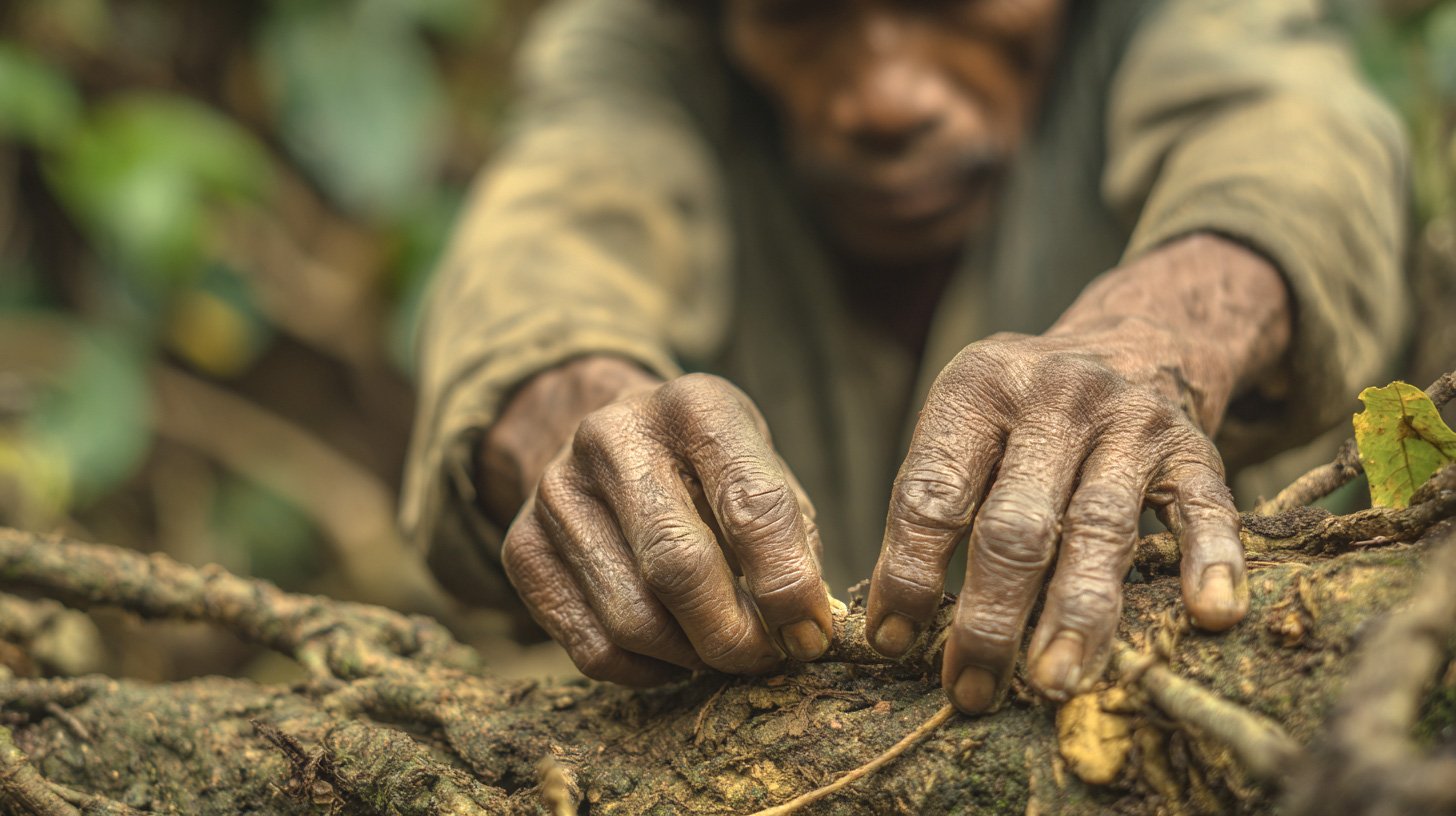
Visual creation: Pierre Guité & Mid-Journey
While Hallé mapped the canopy from the sky, the Asháninka people of the Peruvian Amazon mapped it from the ground. Their knowledge system, honed over thousands of years, identified a woody vine that climbs into Hallé's canopy to access the light: Uncaria tomentosa, known to the world as Cat's Claw or Uña de Gato.
For the Asháninka, Uncaria is not merely a medicinal herb; it is a plantas con madre—a "teacher plant" or "powerful plant" that possesses a spirit capable of communicating with the healer. The use of Uncaria is deeply embedded in their spiritual practice, reserved for the Sancóshi priests who use the plant to re-establish the "communication" between the physical body (ivatsa) and the spirit (isancane).
This is not mysticism divorced from medicine. The Asháninka view illness as a disruption of dialogue. Modern science now recognizes that autoimmune diseases and cancer involve precisely this: a breakdown in cellular communication, in the signaling pathways that tell cells when to grow and when to die. The Asháninka treat the information failure of the body with the information contained in the plant.
But here is where indigenous knowledge reveals a sophistication that took Western science decades to understand: the mystery of chemotypes.
There are two chemically distinct populations of Uncaria tomentosa that look identical to the naked eye. One is rich in Pentacyclic Oxindole Alkaloids (POAs)—the immune stimulants and anti-tumor agents like mitraphylline. The other contains Tetracyclic Oxindole Alkaloids (TOAs) that act on the nervous system and, crucially, can inhibit the immune-stimulating effects of the first. If a patient takes a mixture of both chemotypes, the medicine cancels itself out.
Western manufacturers in the 1990s ignored this, blending harvests indiscriminately and leading to failed clinical trials. The Asháninka priests, however, never made this mistake. They claim to perceive the "good spirits" in specific plants, likely detecting subtle phenotypic cues that distinguish the beneficial vines from the others. This traditional "quality control" is far more sophisticated than early commercial harvesting.
The Sustainability Crisis
The global fame of Cat's Claw—touted as a cure for everything from HIV to cancer—triggered a "gold rush" in the Amazon. Between the 1990s and 2000s, extraction skyrocketed. Harvesters, often driven by poverty and paid by weight, would pull up the entire root system, killing the vine.
The vine grows slowly, climbing for decades to reach the canopy light where it flowers. Destroying the root destroys the genetic individual. We reached a paradox: the more we valued the medicine, the faster we destroyed its source.
A new way was needed—a way to separate the molecule from the biomass.
The 2025 Breakthrough:
Cracking the Code
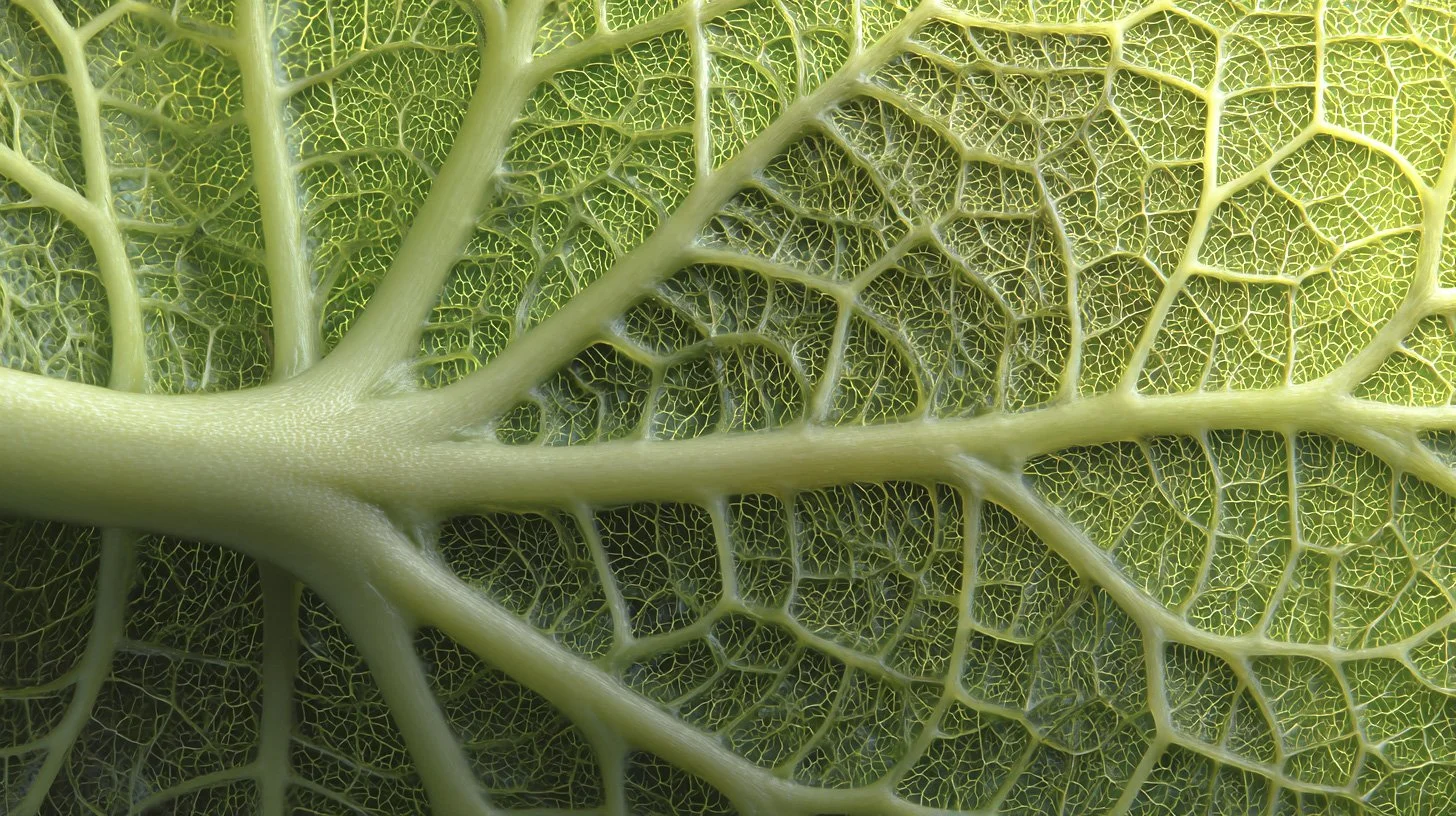
Visual creation: Pierre Guité & Mid-Journey
In October 2025, the gap between the Asháninka's intuition and Western science finally closed.
A team of researchers led by Dr. Thu-Thuy Dang at the University of British Columbia (UBC) and Dr. Satya Nadakuduti at the University of Florida didn't try to harvest the vine. Instead, they sequenced it. Working with Mitragyna parvifolia, a tree species that acts as a "Rosetta Stone" for the Rubiaceae family, a close cousin of Cat's Claw, they unlocked the genomic instructions for creating that impossible "spiro" twist.
They discovered a specific pair of enzymes named MpSOS (Spirooxindole Synthase) and MpDAR (Dehydroajmalicine Reductase)—an oxidase and a reductase—that act like molecular hands. One enzyme holds the precursor molecule in place, while the other folds it into the perfect 3D shape with 100% stereochemical precision. It was, as Dr. Dang put it, like "finding the missing links in an assembly line."
The team didn't just look at the DNA; they analyzed the transcriptome—the RNA molecules that show which genes are actually turned on in different parts of the plant. They examined young leaves, mature leaves, stems, stipules, and roots.
This is where Hallé's architectural insight resurfaces. The team found that gene expression for alkaloid biosynthesis was highly tissue-specific. The "chemical architecture" matched the physical architecture. The young leaves—the sites of reiteration and highest predation risk—were the factories for the precursor molecules. The canopy's stress was indeed its treasure.
Green Alchemy:
The Factory of the Future
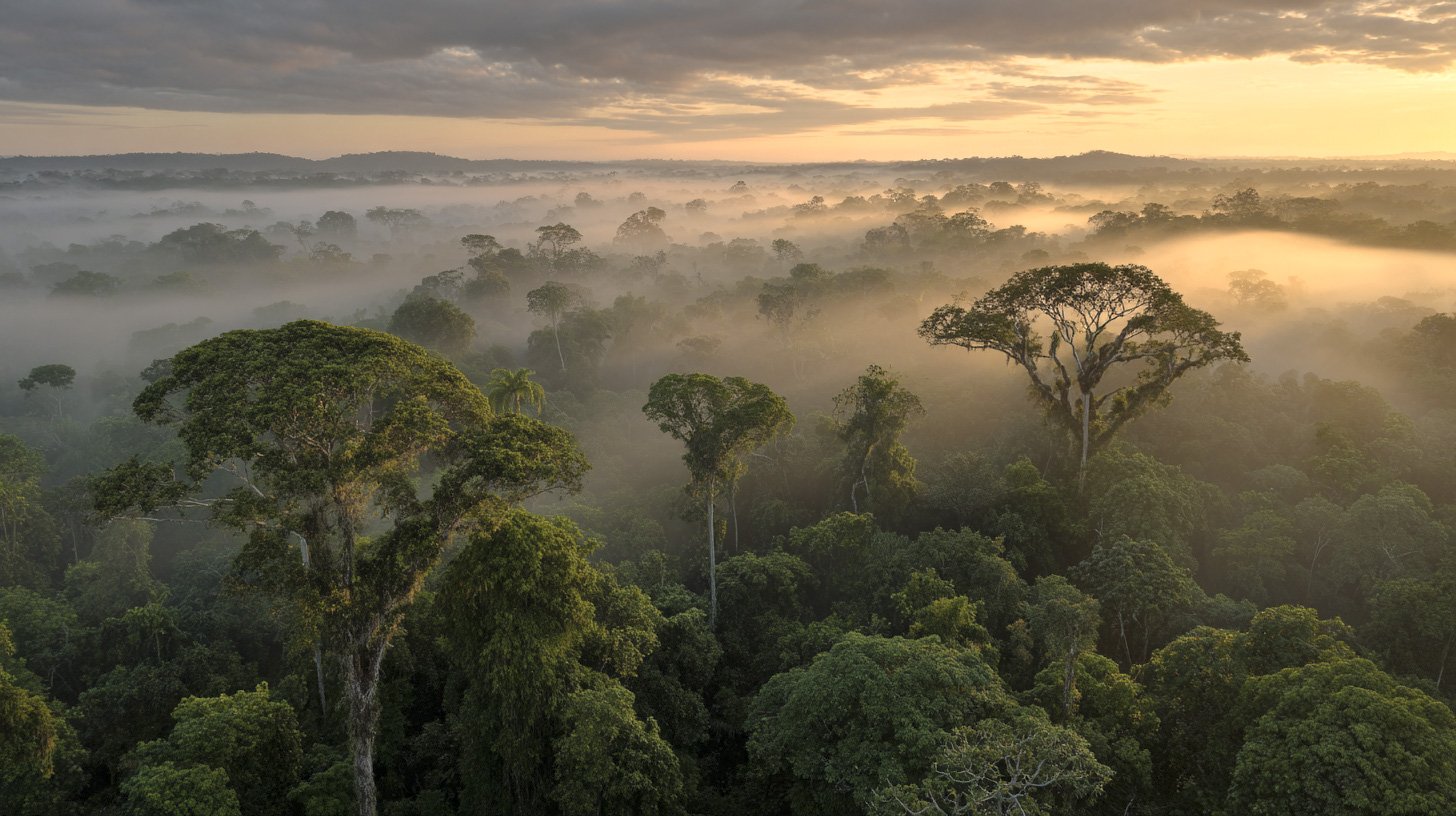
Visual creation: Pierre Guité & Mid-Journey
This discovery changes everything. By identifying the gene that codes for these enzymes, we no longer need the plant to produce the medicine.
We can now insert this genetic code into a simple organism, such as yeast, or a fast-growing model plant, such as tobacco (Nicotiana benthamiana). These "bio-factories" can brew pure mitraphylline in a fermentation tank, just like beer.
This is the essence of Green Alchemy:
Zero Deforestation: We don't need to strip the Amazon to treat leukemia.
Zero Toxic Waste: The process uses water and enzymes, not carcinogens.
Democratized Access: We can produce the drug anywhere in the world, making it accessible to millions rather than a luxury supplement.
The researchers also noted something fascinating: the enzymes they discovered have "broad substrate specificity." They are not picky—they will twist similar molecules that don't exist in nature. This opens the door to Combinatorial Biosynthesis: feeding the enzymes "unnatural" precursors to create "New-to-Nature" compounds that might be more potent against specific cancers or have better solubility than natural mitraphylline.
We are no longer just reading the library of the forest; we are using its grammar to write new books.
The Spirit vs. The Code
As we celebrate this technological leap, we must return to the Asháninka. For the Sancóshi priest, the power of Uncaria lies in its spirit, inextricably linked to the whole plant and its environment. When we isolate the gene for mitraphylline and put it in yeast, do we leave the spirit behind?
Scientific reductionism argues that the molecule is the medicine. Holistic tradition argues that the context is the medicine. Recent research supports the latter: Uncaria contains dozens of other compounds—flavonoids, proanthocyanidins—that likely work in synergy with mitraphylline. A pure mitraphylline drug might be potent against a tumor, but it might lack the "buffering" effects of the whole tea that protect the stomach or aid absorption.
Perhaps the next step is not just synthesizing one molecule, but reconstructing the entire metabolic pathway—effectively creating a "virtual Uncaria" inside a bioreactor that produces the full-spectrum extract. This would honor the complexity of the Asháninka's tea while maintaining the sustainability of the biotech approach.
There is also the question of ownership. The genetic sequence comes from a tree in Southeast Asia; the ethnobotanical knowledge comes from indigenous people in Peru; the technology comes from Canada and the USA. Under the Nagoya Protocol on Access and Benefit-sharing, the custodians of genetic resources and traditional knowledge are entitled to a share of the benefits. If this discovery leads to a billion-dollar cancer drug, we must ensure the Asháninka are not just footnotes in the patent, but partners in the profit.
True innovation in this space involves legal innovation as much as biological innovation.
The Forest as a University
The "No-Touch" philosophy doesn't mean we ignore nature. It means we respect it as a mentor, not a mine. The rainforest is a university where the trees are the professors. We go there to learn their secrets—their architecture, their chemistry, their resilience—and then we apply those lessons back home.
As we stand on the brink of this new era, the question is no longer "What can we take from the Amazon?" but "What can we learn from it?"
Francis Hallé once famously said, "The tree is time made visible". It is a living clock, counting centuries in rings and reiterations. The discovery of the mitraphylline pathway reveals that the tree is also "chemistry made visible"—a physical manifestation of invisible, enzymatic ingenuity.
The convergence of Hallé’s architectural ecology and the UBC team’s genomic molecular biology offers a new template for human progress. It suggests that the most advanced technologies of the 21st century—AI, genomics, biocatalysis—are most powerful when used to emulate the oldest technologies on earth: plants.
We are moving from an Extractive Age (cutting the tree to get the medicine) to a Generative Age (reading the code to grow the medicine). This shift protects the "eighth continent," honors the "powerful plants" of the Asháninka, and opens a limitless horizon for green chemistry.
The Asháninka priests told us the plant had a spirit. Science has finally found the code. And in that convergence lies the incredible promise of a future where we heal ourselves by listening to the trees.
The secrets of the universe are not far away. They are hanging just above our heads, in the canopy, waiting for us to be quiet enough to hear them, and smart enough to read the code without burning the book.
References:
Nguyen, T.-A., et al. A chromosome-level Mitragyna parvifolia genome unveils spirooxindole alkaloid diversification and mitraphylline biosynthesis. The Plant Cell, DOI: 10.1093/plcell/koaf207. Phys.org, 9 octobre 2025.
Hallé, F. (2017). Des données récentes sur les arbres., Académie des Sciences et Lettres de Montpellier*, vol. 48, suppl. 1.
Azevedo, B. C., et al.. Antioxidant activity of an aqueous leaf extract from Uncaria tomentosa and its major alkaloids mitraphylline and isomitraphylline in Caenorhabditis elegans. Molecules, 24(18), 3299, 2019
Montserrat-de la Paz, S., et al. Pharmacological effects of mitraphylline from Uncaria tomentosa in primary human monocytes: Skew toward M2 macrophages. Journal of Ethnopharmacology*, 170, 128-35, 2015.
Heitzman, M. E., et al. Ethnobotany, phytochemistry and pharmacology of Uncaria (Rubiaceae). Phytochemistry, 66(1), 5-29, 2005
Keplinger, K., et al.. Uncaria tomentosa (Willd.) DC. – ethnomedicinal use and new pharmacological, toxicological and botanical results. Journal of Ethnopharmacology, 64(1), 23-34, 1999.
Canopée., Wikipédia, october 2025.
Cat's Claw – Uncaria tomentosa Database file., Tropical Plant Database. Rain-tree.com.
Hallé, F. De l'architecture des arbres. Le Moniteur, 23 septembre 2019.